The "Technical Debt" Crisis in 2025
It is a paradox familiar to every CIO in India: You are under immense pressure to adopt Generative AI, launch mobile apps, and unlock real-time analytics. Yet, your core business runs on a 15-year-old Legacy ERP, a "Green Screen" mainframe, or a heavily customized monolithic application that no one dares to touch.
This is the Legacy Trap.
- The Business Demands: Agility, AI, and Speed.
- The Reality: Brittle code, lost documentation, and a fear that touching one line of code will crash the payroll system.
In 2025, the conversation has shifted. You no longer need to choose between "Stability" and "Innovation." You can have both.
The "Rip and Replace" Trap
For years, consultants sold the "Big Bang" migration: "Delete your old system and spend 3 years moving to a new cloud-native platform."
Why this fails:
- High Failure Rate: 70% of large-scale digital transformations fail to reach their goals.
- Business Disruption: You cannot pause operations for 2 years while you rebuild.
- Lost Logic: Your legacy code contains 20 years of specific business rules (edge cases) that usually get lost in a rewrite.
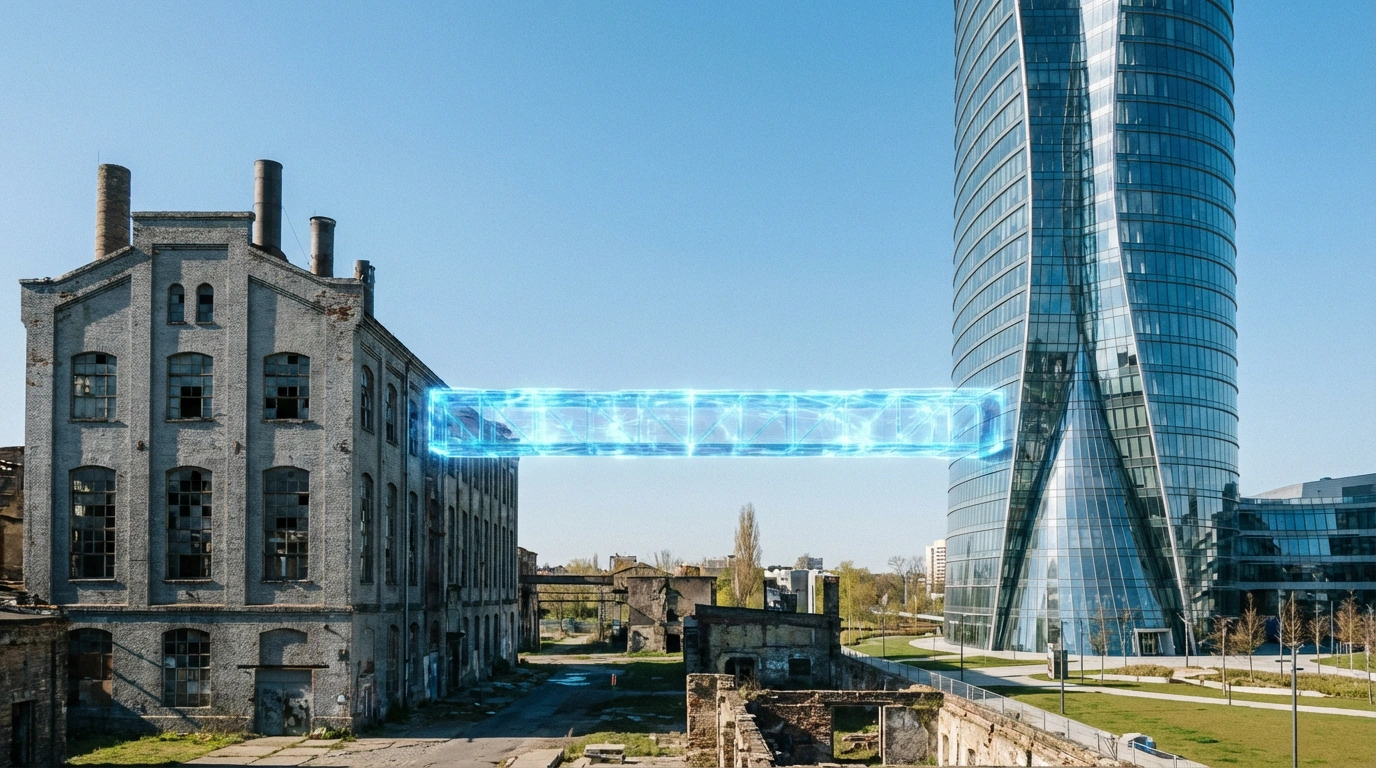
The PriyaQubit Philosophy: Don’t detonate your foundation. Build a skyscraper on top of it.
The 4 Strategies to Modernize Without Rebuilding
We advocate for Non-Invasive Modernization. Here are the four architectural patterns we use to bring AI to legacy environments.
1. API Wrappers (Encapsulation)
Instead of changing the code inside your Mainframe or SQL database, we wrap it in a modern API layer.
- How it works: The old system stays as the "System of Record." The API layer exposes data to modern web/mobile apps.
- ROI: Instant connectivity for Customer Portals without touching the core.
2. UI Overlay (Intelligent Automation)
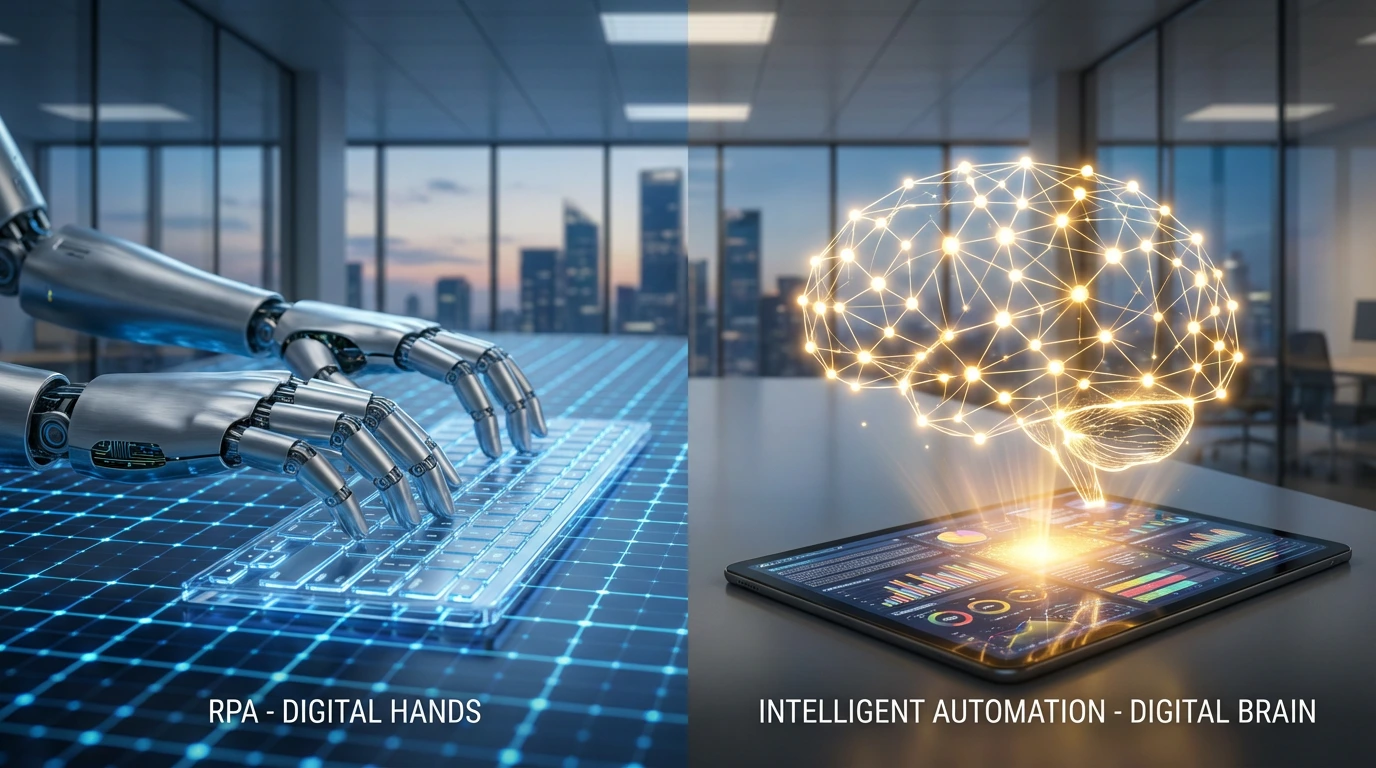
If the system has no APIs, we use Intelligent Automation (IA) to act as the bridge.
- How it works: RPA bots "read" the legacy screens and push the data to a modern AI dashboard.
- ROI: Users get a slick, modern interface; the bots do the dirty work on the backend.
3. Data Replication (The Lakehouse Strategy)
Don't ask your legacy database to run AI queries—it will crash.
- How it works: We replicate data in real-time (CDC) to a Cloud Data Lake (Snowflake/Databricks). The AI runs on the Cloud, not the Mainframe.
- ROI: Real-time predictive analytics with zero impact on operational performance.
4. The Strangler Fig Pattern (Gradual Replacement)
This is the gold standard for moving away from monoliths.
Deep Dive: The Strangler Fig Pattern
Named after the tree that grows around a host tree, this pattern allows you to gradually replace specific functions of your legacy system with Microservices.
- Identify: Pick one module (e.g., "Inventory Search").
- Build: Build a modern microservice for Inventory Search.
- Route: Point the "Inventory" traffic to the new service, while keeping everything else on the old system.
- Repeat: Slowly strangle the old system until it does nothing—then turn it off.
📊 Case Study: Manufacturing ERP Overhaul
Client: A large Indian Auto-Component Manufacturer.
The Problem: Their 20-year-old on-premise ERP was stable but couldn't handle mobile inventory tracking. Warehouse staff used paper clipboards because the ERP didn't run on tablets.
The Solution (Hybrid Approach): Instead of buying SAP S/4HANA (a ₹50 Cr investment), PriyaQubit built a Modern API Layer on top of their existing SQL database.
- We built a React Native Mobile App for warehouse staff.
- We implemented Computer Vision to scan barcodes via the app.
- The App talked to the API, which updated the old ERP in real-time.
The Result:
- Cost: 10% of a full ERP replacement.
- Time: Go-live in 4 months (vs. 2 years).
- Efficiency: Inventory accuracy rose from 82% to 99%.
The Role of Generative AI in Legacy Code
Modernization isn't just about architecture; it's about understanding the code you have. We use GenAI Copilots to accelerate the modernization process itself.
- Code Explanation: AI reads your COBOL or old Java code and explains what business logic it performs.
- Test Case Generation: AI writes automated tests for the old system to ensure we don't break anything during migration.
- Code Conversion: AI assists developers in translating legacy functions into modern Python/Node.js microservices.
Implementation Roadmap: Where to Start?
Don't try to fix everything at once. Follow this maturity curve.
Phase
Action
Goal
Phase 1: Stabilize
(Months 1-2)
Document legacy system using AI; Implement API Wrappers.
Stop the bleeding; enable connectivity.
Phase 2: Augment
(Months 3-6)
Build modern UI/UX on top of APIs; Launch "Quick Win" features.
Improve User Experience (UX).
Phase 3: Strangle
(Months 6-18)
Identify expensive modules; Extract them into Microservices.
Reduce technical debt.
Phase 4: Retire
(Year 2+)
Shut down the legacy monolith once 90% of traffic is moved.
Full cloud-native agility.
Conclusion: Don't Fear Your Legacy
Your legacy system is not a liability; it is a repository of 20 years of business value. You don't need to destroy it to modernize it. You just need to unlock it.
At PriyaQubit, we specialize in the "Art of the Possible"—finding the smartest, lowest-risk path to bring your enterprise into the AI era.
Stuck with a Monolith?
👉 Book a Legacy Architecture Review
FAQs on Legacy Modernization
Q1: Is it secure to wrap legacy systems in APIs? Yes, if done correctly. The API layer acts as a "Security Gatekeeper." We implement modern OAuth2.0 and encryption in the API wrapper, which actually improves the security of the underlying legacy data.
Q2: How much downtime will we face during modernization? With the "Strangler Fig" pattern, downtime is near zero. Because we replace the system piece-by-piece (endpoint by endpoint), the core system remains running the entire time.
Q3: Can AI really understand our custom legacy code? Yes. Modern LLMs (Large Language Models) are trained on billions of lines of code, including older languages like COBOL, Fortran, and Perl. They are surprisingly effective at documenting "Spaghetti Code."
Reference Resource: Gartner IT Roadmap for Digital Transformation — This resource outlines strategic roadmaps for CIOs, validating the phased modernization approach.